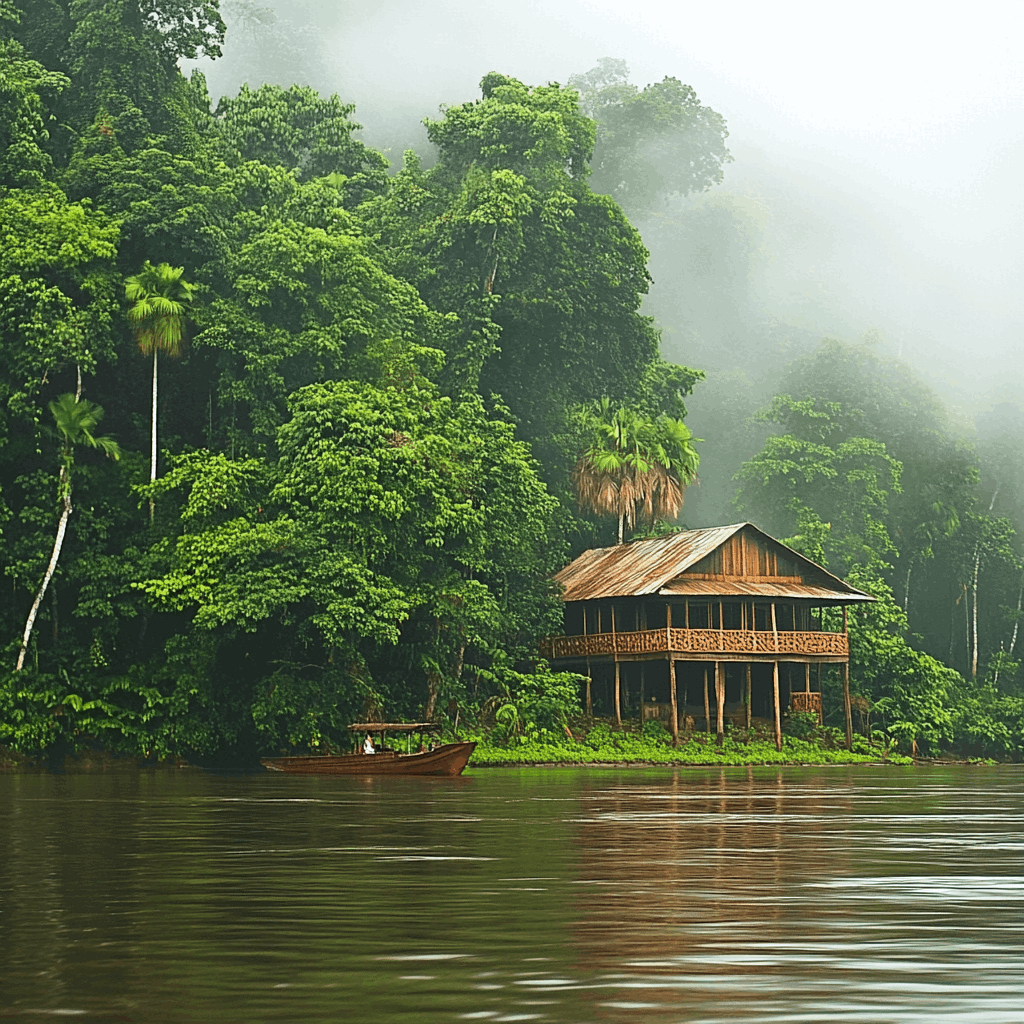
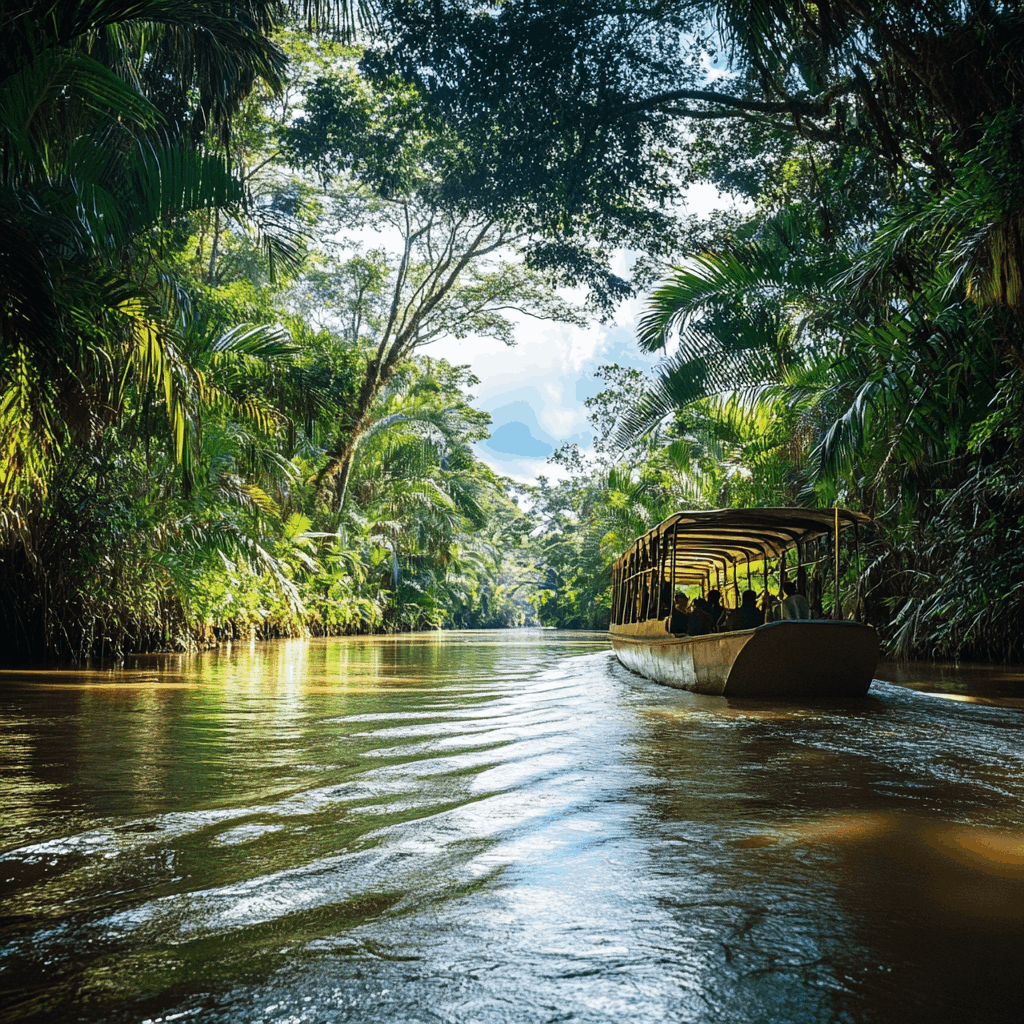
You start in a place like Manaus, Brazil, where the river’s so wide it looks like an ocean. Your boat’s a sturdy little thing, maybe a wooden canoe or one of them motorized skiffs, manned by a local guide who knows every bend of this river like it’s his backyard. These guides, they’re the real deal—born and raised in the Amazon, they can spot a sloth hanging in a tree a mile away or point out a caiman’s eyes glowing in the dark. My guide, João, had this knack for telling stories about the river spirits while steering us through channels so narrow the branches scraped the boat.
The first thing that hits you is the noise. The jungle’s LOUD—howler monkeys screaming, birds squawking like they’re arguing over something. You’ll stop at spots to hike into the forest, your boots sinking into the mushy ground, while João or whoever’s leading points out medicinal plants or a tree that’s like, 200 years old. One time, we stumbled on a clearing where a family of capybaras was just chilling, looking like giant guinea pigs without a care in the world. You might even get lucky and spot a pink river dolphin—those things are real, not some fairy tale, though they’re shy and pop up when you least expect.
Meeting indigenous communities is a whole other vibe. We docked at a village of the Tikuna people, and they welcomed us with this quiet kind of warmth. No big show, just real life—kids running around, women weaving baskets from palm fronds. They showed us how they fish with nets and cook pirarucu, this massive fish that tastes like it’s from another planet. You don’t just gawk and leave; there’s a chance to talk (through your guide, usually) about their lives, how they’re keeping their traditions alive while the world creeps closer. It’s humbling, makes you think twice about your own life back home.
Wildlife’s the star of the show, though. On a night tour, with just a flashlight and the boat’s engine cut, we saw a pair of red eyes—turned out to be a spectacled owl, staring like it owned the place. Another day, we watched a three-toed sloth move so slow it was almost funny, like he was mocking our rush. If you’re into snapping pics, bring a good camera, but don’t spend the whole time behind a lens—you gotta feel this place, not just frame it.
These tours ain’t just joyrides; they’re often tied to sustainable outfits. The one I did donated part of the fee to a group protecting the river from illegal logging. You’re not just a tourist, you’re helping keep this place alive. Most trips last a few days—three or four is enough to get deep into the jungle without feeling like you’re lost forever. You’ll sleep in eco-lodges or hammocks on the boat, eating rice, beans, and whatever fish the crew catches. It’s rough around the edges, but that’s the point.
One thing: pack bug spray. I forgot mine and got eaten alive by mosquitoes the size of quarters. Also, don’t expect Wi-Fi or fancy showers—this is the Amazon, not a resort. Weather’s another wild card; it might pour for an hour then clear up like nothing happened. Bring a raincoat and just roll with it.
By the time you’re heading back to Manaus, you’re different. The Amazon gets under your skin—the smells of wet earth, the sound of water lapping the boat, the way the jungle seems to watch you back. It’s not just a trip; it’s like stepping into a world that’s bigger than you, older than you, and somehow still letting you in on its secrets. If you’re chasing adventure, this is it. Just don’t forget that bug spray.